
This article is for educational and informational purposes only. It reflects personal experience and publicly available clinical trial data. Nothing in this post constitutes medical advice. Retatrutide is not FDA-approved for human use. Do not use any compound discussed here without the supervision of a licensed medical professional.
Total Testosterone on TRT Doesn't Matter (Track These 6)
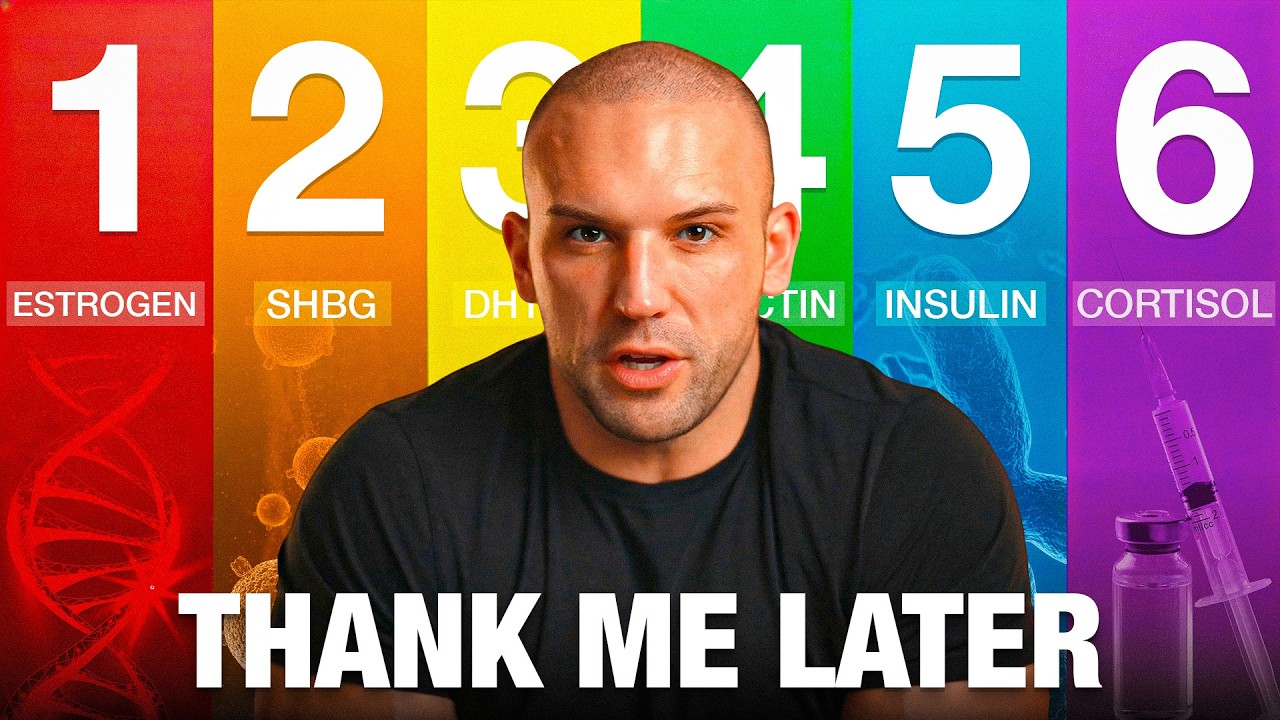
I have run bloodwork on hundreds of men on TRT and I can tell you this with certainty: total testosterone is one of the least useful numbers on your lab panel. I have seen men with a total T of 900 who feel like garbage and men with 550 who feel incredible. The number alone tells you almost nothing about how your body is actually using testosterone.
What matters is the full picture. Free testosterone, SHBG, estradiol, hematocrit, IGF-1, and fasting insulin together paint a far more accurate story than any single total T reading. These six markers tell me whether a man is optimized or just medicated.
This is the shift I want every man on TRT to make. Stop chasing a number your doctor arbitrarily told you to hit. Start understanding the biomarkers that actually govern how you feel, how you look, and how long you stay healthy.
I am going to walk you through exactly what each of these six markers is, why it matters, and what optimal looks like based on the clinical work I do with clients every day.
Why Total Testosterone Misleads You
Total testosterone measures both the testosterone bound to proteins in your blood and the small fraction that is actually free and available to your cells. The bound portion is biologically inactive. It cannot enter cells, cannot trigger androgen receptors, and cannot produce any of the effects you associate with high testosterone. If your SHBG is elevated, your total T can read 1000 ng/dL while your free T sits at a level that is effectively hypogonadal. This happens constantly and most doctors miss it entirely because they only look at total T.
Biomarker 1: Free Testosterone
Free T is the fraction not bound to SHBG or albumin. This is what your tissues actually use. I want my clients in the range of 20 to 25 pg/mL on a reliable equilibrium dialysis assay. Below 15 pg/mL and most men report low energy, poor libido, and difficulty building muscle regardless of what their total T reads. Above 30 pg/mL and you start running into elevated estradiol and hematocrit issues. Free T is the primary target I optimize around, not total T.
Biomarker 2: SHBG
Sex hormone-binding globulin is the protein that binds testosterone and renders it inactive. High SHBG is the most common reason men feel symptomatic despite normal or high total testosterone. Target SHBG between 20 and 35 nmol/L for optimal free T availability. If SHBG is chronically elevated, I look at thyroid function, liver health, and insulin sensitivity since all three affect SHBG production. Low SHBG below 15 nmol/L often indicates insulin resistance and can increase cardiovascular risk on TRT.
Biomarker 3: Estradiol Sensitive Assay
Estradiol needs to be measured using the sensitive LC-MS/MS assay, not the standard immunoassay which is wildly inaccurate for men on TRT. I target estradiol between 20 and 30 pg/mL for most clients. Below 15 and you get joint pain, low libido, and mood issues. Above 40 and you get water retention, emotional volatility, and potential cardiovascular strain. I rarely use AIs because they crash estradiol and cause more problems than they solve.
Biomarker 4: Hematocrit
TRT increases red blood cell production. Above 52 percent hematocrit, blood viscosity increases significantly and the cardiovascular risk profile shifts. I pull labs every 90 days when clients are new to TRT and monitor hematocrit closely. If it climbs above 52 percent I reduce injection frequency, increase hydration, and assess iron status. Hematocrit above 55 percent is a hard line for me and warrants a protocol pause and full cardiovascular workup.
Biomarker 5: IGF-1
IGF-1 reflects growth hormone output and is a critical longevity and body composition marker. Optimal range for most men is 200 to 300 ng/mL depending on age. Chronically low IGF-1 is associated with sarcopenia, poor recovery, and metabolic dysfunction. Chronically elevated IGF-1 above 400 ng/mL raises long-term cancer risk and warrants dose reduction.
Biomarker 6: Fasting Insulin and HOMA-IR
Insulin resistance is the silent killer of TRT outcomes. I have seen men with perfect total T, free T, and estradiol who still feel terrible because their insulin sensitivity is wrecked. Fasting insulin above 10 uIU/mL and HOMA-IR above 2.0 tells me we have a metabolic problem that no amount of testosterone is going to fix. Before I optimize hormones I optimize metabolic health.
FAQ
What is a good total testosterone level on TRT?+
Total testosterone range on TRT is less important than most people think. I focus on free testosterone in the 20 to 25 pg/mL range, which typically corresponds to a total T anywhere from 600 to 1100 ng/dL depending on SHBG. Stop chasing a total T number and start optimizing the six markers that actually predict how you feel.
Why do I feel bad on TRT even though my testosterone is high?+
High total testosterone with poor free testosterone, elevated SHBG, or high estradiol is the most common cause of feeling symptomatic despite good lab numbers. Insulin resistance is another major culprit. Ask for free T by equilibrium dialysis, sensitive estradiol, SHBG, hematocrit, and fasting insulin.
How often should I get bloodwork on TRT?+
In the first year of TRT I recommend labs every 90 days minimum. Once you are stable and optimized, every 6 months is sufficient. Every panel should include: free and total testosterone, sensitive estradiol, SHBG, hematocrit, CBC, CMP, and fasting insulin. I also run IGF-1, PSA, and lipids annually.
What SHBG level is too high on TRT?+
SHBG above 45 nmol/L significantly limits free testosterone bioavailability and most men will feel hypogonadal symptoms regardless of their total T. I target SHBG between 20 and 35 nmol/L. If SHBG is persistently elevated I investigate thyroid function, liver enzymes, and overall metabolic health before adjusting the TRT protocol.
Is hematocrit dangerous on TRT?+
Hematocrit above 52 percent increases blood viscosity and raises cardiovascular risk. It is one of the most under-monitored risks of TRT. I check it every 90 days in the first year. If hematocrit climbs above 52 percent I reduce injection frequency and increase hydration. Above 55 percent I pause the protocol and run a full cardiovascular assessment before continuing.
The personal experience shared in this article reflects an individual result under medical supervision. Results are not typical and will vary based on individual health status, protocol, and compliance. Nothing here should be interpreted as a guarantee of outcomes or a recommendation to self-administer any compound. Always consult a licensed physician before starting any peptide or hormone protocol.
Related Articles


Work With My Team
If you're serious about optimizing your hormones, peptides, and body composition the right way — apply to work with my team at nicholastrigili.com. We use bloodwork, cellular testing, and proven protocols to get real results.